 Anthropological studies of traditional African and Asian societies often describe group interaction with babies, specifically, passing around of the baby to all group members in a warm, playful, rhythmic pattern of “touching dance”. For example, tribes such as the Nso of Cameroon provide a great deal of body stimulation by consistently rocking and lifting the baby up and down while making eye contact. In contrast, it is sometimes noted that Western cultures place a stronger emphasis on autonomy and the capacity to self-regulate arousal and emotion, with parents often advised to avoid too much physical contact such that babies learn to self-regulate.Read More »
Category: Blog
Four Types of Facebook Fans: are all fans created equal? Presenting a typology of Facebook ‘Likers’
 Why do people become fans of brands on Facebook? Are they motivated by their interest in the brand, or are they influenced by their friends, or by their personality traits? We recently conducted a study of Facebook fans that reveals four very different ‘types’ of Facebook fan, each with different motivations for ‘Liking’ brands, and each with very different needs and motivations for using Facebook. Read More »
Pursuing the Good Life: Reflections on Positive Psychology
 “I love this game….any game….as long as it is played with others.”
Christopher Peterson, Pursuing the Good Life, p. 213
Christopher Peterson passed away in October 2012. He was a regular contributor to Psychology Today, where he wrote for a blog titled “The Good Life” focused on positive psychology. Oxford University Press has since published a collection of Peterson’s blog posts, Pursuing the Good Life: 100 Reflections on Positive Psychology. Below I reflect upon Peterson’s outstanding contribution.
Starting Slow and Recovering Fast: the power of slowing down in a world that keeps pushing us to speed up!
 Two documents, three half-written replies to emails, a pop-up window informing that you have three, no four, unread messages, three Google pages and your Twitter feed. Each of these stares at you from your PC as the radio app on your phone announces that it’s 9:30AM and time for news headlines with Elouise. All of these demands queue up as you try to plan out notes for a 10 o’clock meeting and a to-do list for the rest of Monday. How, you wonder, did things get this chaotic this quickly? Little wonder your heart is thumping.Read More »
Learning Together and the Challenge of Collaboration: the effects of trust and open and closed dynamics on consensus and efficacy.
 Cooperative learning and collaborative inquiry are increasingly influential areas of research and practice in psychology and education. Cooperative learning refers to the learning that occurs when a group works together to accomplish shared learning goals (Johnson et al., 2001). Many collaborative inquiry methodologies also emphasise the cognitive and social growth of individuals working together in a group setting. While there is a large research literature suggesting that cooperative learning and collaborative inquiry can be used to facilitate student learning, Janssen et al. (2010) noted that the majority of the studies in the area are effect-oriented in nature, that is, examining the effects of cooperation and collaboration on outcomes such as student achievement, time on task, and the use of metacognitive learning skills. Janssen et al. (2010) suggested that more process-oriented research is needed. Read More »
Systems of Strengths: on a new approach to understanding and building systems of strengths
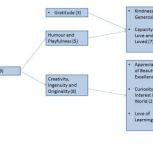 Yesterday I posted a blog focused on understanding the impact that winning and power has on our brain and behavior. The blog post was based on my reading of the brilliant new book by Ian Robertson and I entitled the blog, Approaching Power with Humility and Wisdom. From a positive psychology perspective, the feeling of power and empowerment that is reinforced by ‘winning’ may be similar in certain respects to the feeling of courage — and possibly extends over time to the more stable, trait-like experience of possessing the strength of courage, which involves the ability to overcome fear in the face of challenges. Read More »
Approaching Power with Humility and Wisdom: Understanding the impact that winning and power has on your brain and behavior
 Most of us know of the genius of Pablo Picasso, the Spanish painter, sculptor, printmaker, and ceramicist who revolutionized art in the opening decades of the 20th century. But few of us know the story of his son, Paulo Picasso. Paulo led a feckless life of drifting and heavy drinking – he could never hold down a job or forge a life independent of his domineering, neglectful father. Paulo lost his family, became live-in secretary and chauffeur to his father, and had his own son Pablito tragically commit suicide by drinking bleach two days after Pablo Picasso’s funeral in 1973. The tragic story of Paulo and his family highlights the sad and obvious truth that being born to successful parents does not guarantee success in life – becoming a ‘winner’ is not a genetic endowment that is passed from generation to generation. The children of rich and successful parents are not immune to anxiety and depression and drug abuse (Way et al., 1994). While Pablo Picasso complained that his son Paulo had no motivation and drive to achieve in life, Pablo may have failed to understand how to empower his son and approach the use of his power with humility and wisdom. Ultimately, Pablo Picasso became a winner who failed to help his son become a winner. But how do we become a winner, a good winner, a sporting winner, magnanimous in victory, and wise in the use of power? How do we approach power with humility and wisdom?
Love at Any Age: younger and older adults describe the elements of romantic relationship success
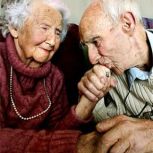 ‘The human heart, at whatever age, opens to the heart that opens in return’
Maria Edgeworth (1767-1849)
Romantic love has been described as ‘a human universal, or near universal’ and is associated with intense emotional experiences such as increased energy, euphoria, obsessive thinking about the loved one, feelings of dependency and craving. When people are ‘in love’ they may feel as if they have uncovered the meaning of life. People often report feeling complete and that their life feels whole. Bronte superbly captured the experience in Wuthering Heights: ‘‘I am Heathcliff – he’s always, always in my mind – not as a pleasure, any more than I am always a pleasure to myself – but, as my own being.”
Openness to Experience and Intellectual Ability: on openness to experience and the maintenance of intellectual abilities
 People who are high on Openness to experience are generally receptive to entertaining new and challenging facets of cultural life, as well as personal thoughts and emotions (McCrae & Costa, 2003), and studies have reported a positive relationship between Openness to experience and performance on tests of intelligence (Ackerman & Heggestad, 1997; Gignac, Stough, & Loukomitis, 2004). Read More »
Critical Thinking and Real-World Outcomes: predicting real-world outcomes of critical thinking
 Last year Reebok was forced to refund $25 million to customers who purchased their EasyTone toning shoes after research published by the American Council on Exercise found that the toning shoes were no better than regular sneakers at toning muscles or burning calories (Porcari, Greany, Tepper, Edmonson, Foster, & Anders, 2011). The incredible popularity of the toning shoes (even with no evidence of their effectiveness) illustrates the need for critical thinking among consumers who face an onslaught of marketing campaigns that seek to persuade them to purchase things that are ‘good’ for them. Consumers who can think critically about sensational product claims may have saved themselves the $100-$245 expense of purchasing these faux-fitness shoes. Read More »
 Michael Hogan